Natural and high-intensity sweeteners serve different purposes in food formulation. Natural sweeteners such as stevia extract provide plant-derived sweetness, while erythritol is a bulk polyol that contributes sweetness and texture. High-intensity sweeteners such as aspartame deliver strong sweetness at very low inclusion levels, helping manufacturers reduce added sugar without adding significant bulk. The right choice depends on the target sweetness, taste profile, processing conditions, product texture, labeling requirements, and regulatory market.
For food manufacturers, selecting a sweetener is not simply a question of whether an ingredient is natural or artificial. It is a technical decision that affects formulation costs, sensory quality, production efficiency, and final product positioning.
Understanding Natural and High-Intensity Sweeteners
Natural sweeteners generally include ingredients obtained from plant sources or naturally occurring carbohydrate-related compounds. Steviol glycosides extracted from Stevia rebaudiana leaves are a representative example. Erythritol, although commonly grouped with natural sugar alternatives, belongs to the polyol family and is commercially produced through carbohydrate fermentation followed by purification.
High-intensity sweeteners provide sweetness many times greater than sucrose. Because only small quantities are needed, they contribute little or no energy at typical use levels. Aspartame is an amino-acid-based high-intensity sweetener widely used in beverages, chewing gum, and other reduced-sugar food products.
The main technical difference is their functional contribution. High-intensity sweeteners primarily deliver sweetness, whereas bulk sweeteners such as erythritol can also contribute solids, mouthfeel, and physical structure.
Stevia Extract: A Plant-Derived High-Intensity Sweetener
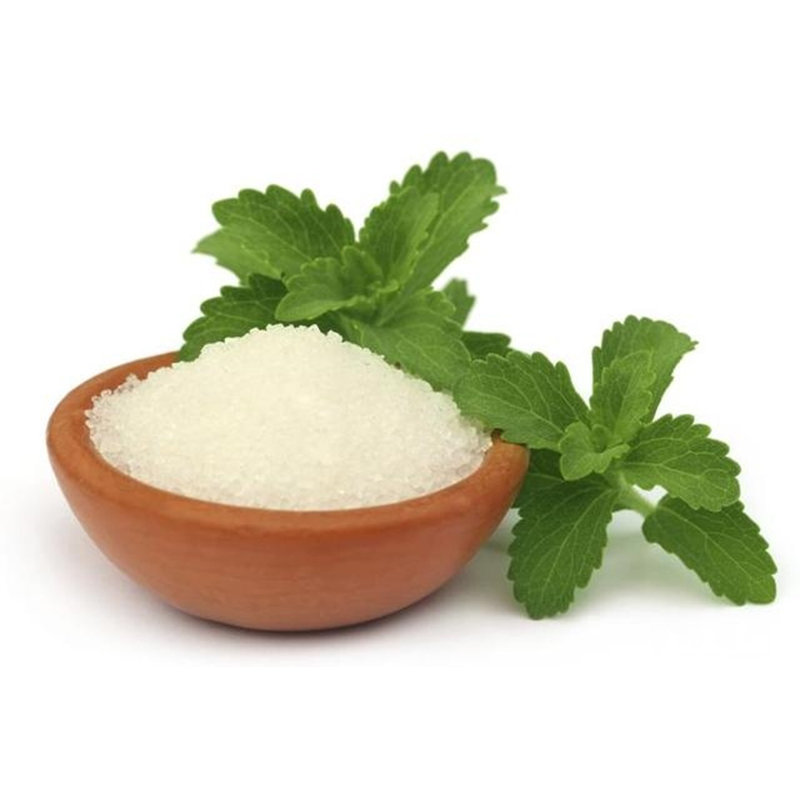
Food-grade Stevia Extract | GNF Chemical
Stevia extract contains steviol glycosides, naturally occurring compounds responsible for the plant's intense sweetness. Depending on the glycoside composition and purity, stevia-based sweeteners can be approximately 200–400 times sweeter than sucrose.
One important advantage of stevia is its suitability for products targeting plant-derived or natural-origin sweetener positioning. It is widely considered for reduced-sugar beverages, flavored water, dairy products, confectionery, and tabletop sweeteners.
However, stevia is not a direct one-to-one replacement for sugar. Some glycoside profiles can produce lingering sweetness, bitterness, or licorice-like notes. Reb A, Reb D, and Reb M may have different sensory characteristics, so buyers should confirm the exact glycoside composition rather than evaluating all stevia extracts as identical.
Formulation recommendation: Stevia is a practical option when sweetness intensity and plant-derived positioning are priorities. In beverage applications, small-scale sensory trials and acid-sweetness balance testing are recommended before commercial production.
Explore Stevia Extract for food and beverage ingredient sourcing.
Erythritol: A Bulk Sweetener for Texture and Sweetness
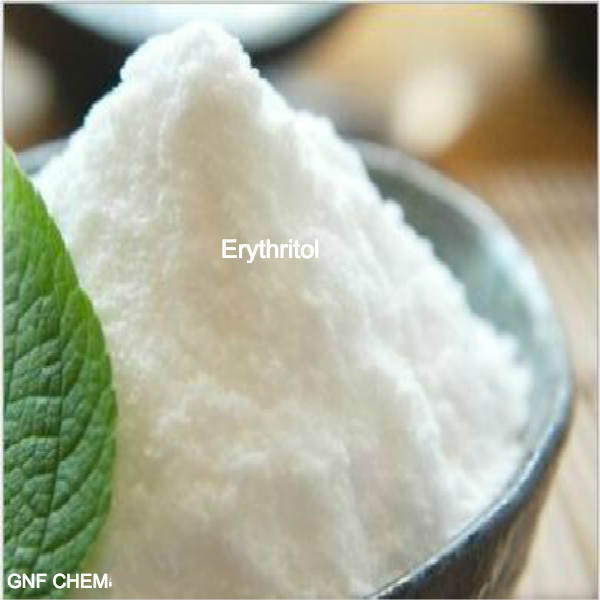
Food-grade Erythritol | GNF Chemical
Erythritol is a sugar alcohol (polyol) produced commercially through fermentation of carbohydrate sources. It provides approximately 60–70% of the sweetness of sucrose and is commonly used in sugar-reduced and sugar-free formulations.
Unlike stevia and aspartame, erythritol can contribute physical bulk to a formulation. This makes it particularly useful in applications where sugar replacement involves more than sweetness alone.
Typical applications include:
- Bakery products: Provides bulk and sweetness in reduced-sugar cakes, cookies, and baked goods.
- Confectionery: Used in sugar-free candies and chocolate formulations.
- Chewing gum: Contributes sweetness and a cooling mouthfeel.
- Beverages: Supports sweetness adjustment and can be combined with high-intensity sweeteners.
- Dairy products: Used in selected reduced-sugar desserts and dairy-based formulations.
Its cooling effect is a distinctive sensory characteristic. While this can be desirable in mint products and chewing gum, it may be less suitable for formulations requiring a warm, sugar-like taste profile.
Another consideration is gastrointestinal tolerance. Excessive consumption of erythritol may produce laxative effects. Manufacturers should evaluate the expected serving size, total polyol content, and applicable labeling requirements.
Formulation recommendation: Erythritol is particularly useful when a manufacturer needs both sweetness and ingredient bulk. For closer sweetness matching to sucrose, it can be combined with stevia or another permitted high-intensity sweetener.
View Erythritol Powder for food-grade ingredient specifications and bulk supply information.
Aspartame: High-Intensity Sweetness for Low-Sugar Formulations

Food-grade Aspartame | GNF Chemical
Aspartame is a high-intensity sweetener composed of two amino acids: aspartic acid and phenylalanine. It is approximately 200 times sweeter than sucrose, allowing manufacturers to achieve the desired sweetness with a relatively small ingredient quantity.
Compared with some other high-intensity sweeteners, aspartame offers a sweetness profile that can closely resemble sugar in suitable formulations. It is widely used in reduced-calorie beverages, powdered drink mixes, chewing gum, desserts, and selected dairy products.
Its main formulation advantage is sweetness efficiency. Because the required inclusion level is low, it can reduce the amount of added sugar without significantly increasing the total solids content.
However, aspartame has an important processing limitation: it is not suitable for prolonged high-temperature processing because its sweetness can degrade under certain heat and moisture conditions. Formulators should assess the actual processing temperature, holding time, pH, and storage conditions.
Another critical consideration is labeling. Aspartame contains phenylalanine, so products containing it must comply with applicable phenylalanine disclosure requirements for people with phenylketonuria (PKU).
Formulation recommendation: Aspartame is worth evaluating for beverages and other products where high sweetness intensity, a relatively sugar-like taste profile, and low ingredient usage are priorities. It is less suitable when the production process requires prolonged high-temperature exposure.
For ingredient sourcing, see Food Grade Aspartame.
Natural vs. High-Intensity Sweeteners: Key Differences
The following comparison highlights the practical differences between three commonly evaluated sweeteners.
| Criteria | Stevia Extract | Erythritol | Aspartame |
|---|---|---|---|
| Category | Steviol glycosides | Polyol | Dipeptide sweetener |
| Sweetness vs. sucrose | About 200–400x | About 0.6–0.7x | About 200x |
| Ingredient bulk | Low | High | Very low |
| Taste profile | May have lingering notes | Cooling sensation | Sugar-like sweetness |
| Heat considerations | Generally suitable for many heated applications | Generally heat-stable | Limited under prolonged heating |
| Typical applications | Beverages, dairy, tabletop products | Bakery, candy, gum | Beverages, gum, desserts |
These values are indicative formulation references, not universal specifications. Actual sweetness depends on ingredient purity, composition, concentration, temperature, acidity, and the food matrix.
How to Select the Right Sweetener for Food Manufacturing
Professional sweetener selection should begin with the finished product rather than the ingredient's marketing category. The following considerations can help R&D teams and procurement managers make a more practical decision.
1. Define the product's sugar-reduction target.
Determine whether the objective is partial sugar replacement, a no-added-sugar formulation, or a sugar-free product. Each objective creates different requirements for sweetness intensity, solids, and labeling.
2. Evaluate taste and mouthfeel.
Conduct sensory trials at several concentrations. Check sweetness onset, peak intensity, lingering sweetness, bitterness, cooling sensation, and interactions with acids and flavorings.
3. Check processing conditions.
Review temperature, pH, moisture, processing time, and shelf-life requirements. Aspartame requires particular attention to heat exposure, while erythritol and steviol glycosides should also be tested in the actual food matrix.
4. Consider sweetener combinations.
Blending can improve formulation performance. For example, erythritol can provide bulk while stevia contributes intense sweetness. Aspartame may also be combined with other permitted sweeteners to adjust the overall sensory profile. Any combination must comply with local additive-use limits.
5. Confirm regulatory suitability.
Check the permitted food categories, maximum use levels, purity specifications, labeling rules, and applicable additive codes in every target market. An ingredient approved in one country is not automatically permitted under the same conditions elsewhere.
Quality Standards and B2B Sweetener Procurement
For importers, distributors, and food manufacturers, purchasing decisions should consider more than the quoted price per kilogram. Consistent quality and reliable documentation are essential for commercial production.
Before placing a bulk order, buyers should request and evaluate:
- Certificate of Analysis (COA): Verify assay, purity, moisture, appearance, and relevant impurity limits.
- Food-grade specifications: Confirm compliance with the applicable FCC, JECFA, or regional food additive standards, where relevant.
- Safety documentation: Request specifications, SDS, allergen information, and relevant contaminant or microbiological test results.
- Certification records: Check the validity and scope of ISO, FSSC 22000, HACCP, HALAL, or KOSHER certificates as applicable.
- Packaging and storage: Confirm packaging material, net weight, moisture protection, shelf life, and recommended storage conditions.
- Supply capability: Evaluate MOQ, production capacity, batch consistency, lead time, export documentation, and logistics arrangements.
At GNF Chemical, the sweetener portfolio covers high-intensity sweeteners and polyol alternatives for food and beverage manufacturing. The company provides B2B ingredient sourcing, bulk packaging options, COA documentation, and international logistics support. Buyers can discuss product specifications, sample availability, and customized procurement requirements before confirming an order.
For a broader selection of food-grade ingredients, visit the Sweeteners Product Category.
Frequently Asked Questions About Sweetener Selection
Q1: What is the main difference between natural and high-intensity sweeteners?
Natural describes an ingredient's source or production characteristics, while high-intensity describes its sweetness relative to sucrose. These are not mutually exclusive categories. Steviol glycosides are plant-derived natural-origin ingredients and are also high-intensity sweeteners.
Q2: Is stevia better than aspartame for sugar-free beverages?
Neither is universally better. Stevia is useful for plant-derived product positioning, while aspartame can provide a sweetness profile closer to sucrose in suitable formulations. The decision should consider taste, processing conditions, labeling, and market regulations.
Q3: Can erythritol replace sugar completely in bakery products?
Not always. Erythritol provides bulk and sweetness, but it does not reproduce all the functional properties of sucrose, such as browning, moisture retention, and certain structural effects. Additional formulation adjustments may be necessary.
Q4: Can stevia and erythritol be used together?
Yes. This is a common formulation approach. Erythritol contributes bulk and a mild sweetness, while stevia increases sweetness intensity. The blend ratio should be optimized through sensory and stability testing.
Q5: What documents should buyers request when purchasing food-grade sweeteners in bulk?
Buyers should request a batch-specific COA, technical specification sheet, SDS, applicable food-grade compliance documents, and relevant certification records. Additional testing may be needed depending on the target market and product application.
Q6: Is aspartame suitable for people with phenylketonuria?
No. Aspartame contains phenylalanine, so individuals with phenylketonuria (PKU) must avoid or restrict it according to medical guidance. Food manufacturers should follow applicable labeling requirements for products containing aspartame.
Discuss Your Sweetener Sourcing Requirements with GNF Chemical
Choosing between stevia extract, erythritol, and aspartame requires a balance of sweetness performance, processing compatibility, regulatory compliance, and total formulation cost. A technically suitable ingredient can help manufacturers achieve consistent product quality while meeting changing market expectations for reduced-sugar and sugar-free foods.
Whether you are developing a new beverage, reformulating confectionery, or sourcing bulk food-grade sweeteners for distribution, GNF Chemical can support your ingredient sourcing requirements. Contact our team to request product specifications, COA documents, samples, and competitive bulk quotations.
Technical and regulatory references: